Why NASA Used Claude AI for Mars Exploration
In December 2025, NASA's Perseverance rover completed its first AI-planned drive on Mars. Claude AI cut route planning time by 50%, opening a new era of deep space exploration.
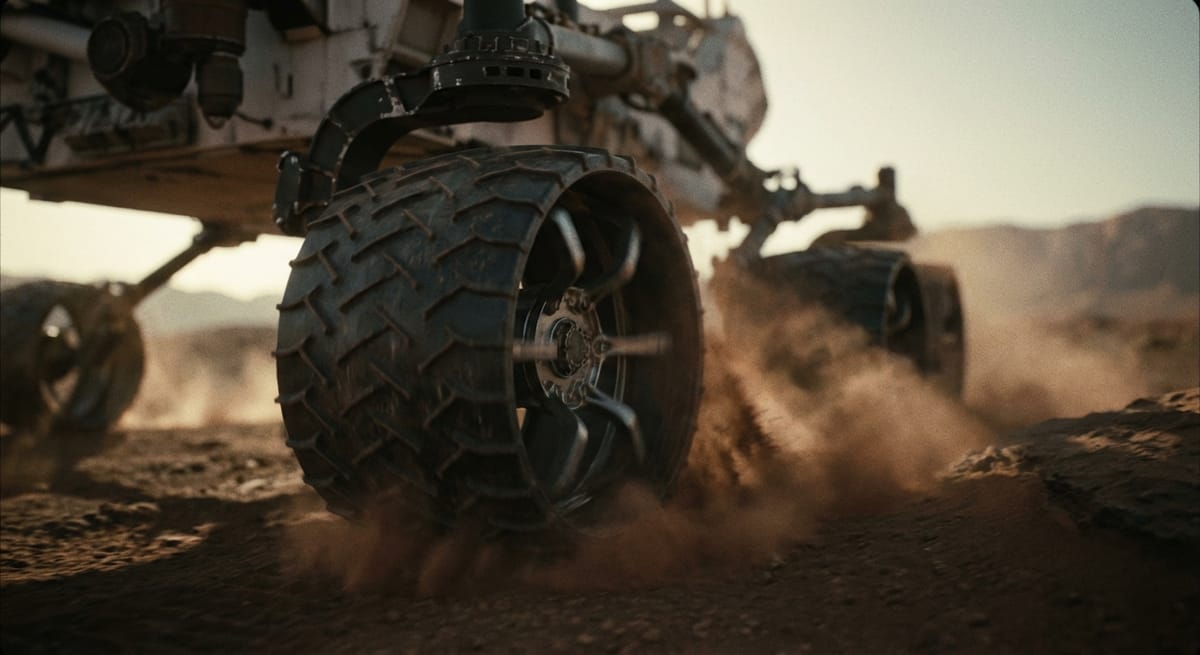
In December 2025, something historic happened on Mars. NASA's Perseverance rover completed a 456-meter drive along a route planned entirely by AI — not a human engineer, but Claude AI.
A round-trip signal between Mars and Earth takes about 20 minutes at the speed of light. Imagine sending a text and waiting 20 minutes for a reply. That delay is why Mars rovers have historically moved only once or twice a day — a team of engineers would spend hours poring over orbital imagery, plotting a route, uplink the commands, and wait. Repeat.
Now AI is cutting that process in half. Here's how it works.
456 Meters — and What It Really Means
On December 8 and 10, 2025, Perseverance covered 210 meters and 246 meters respectively — 456 meters total, roughly the length of four and a half football fields. But the distance isn't the point.
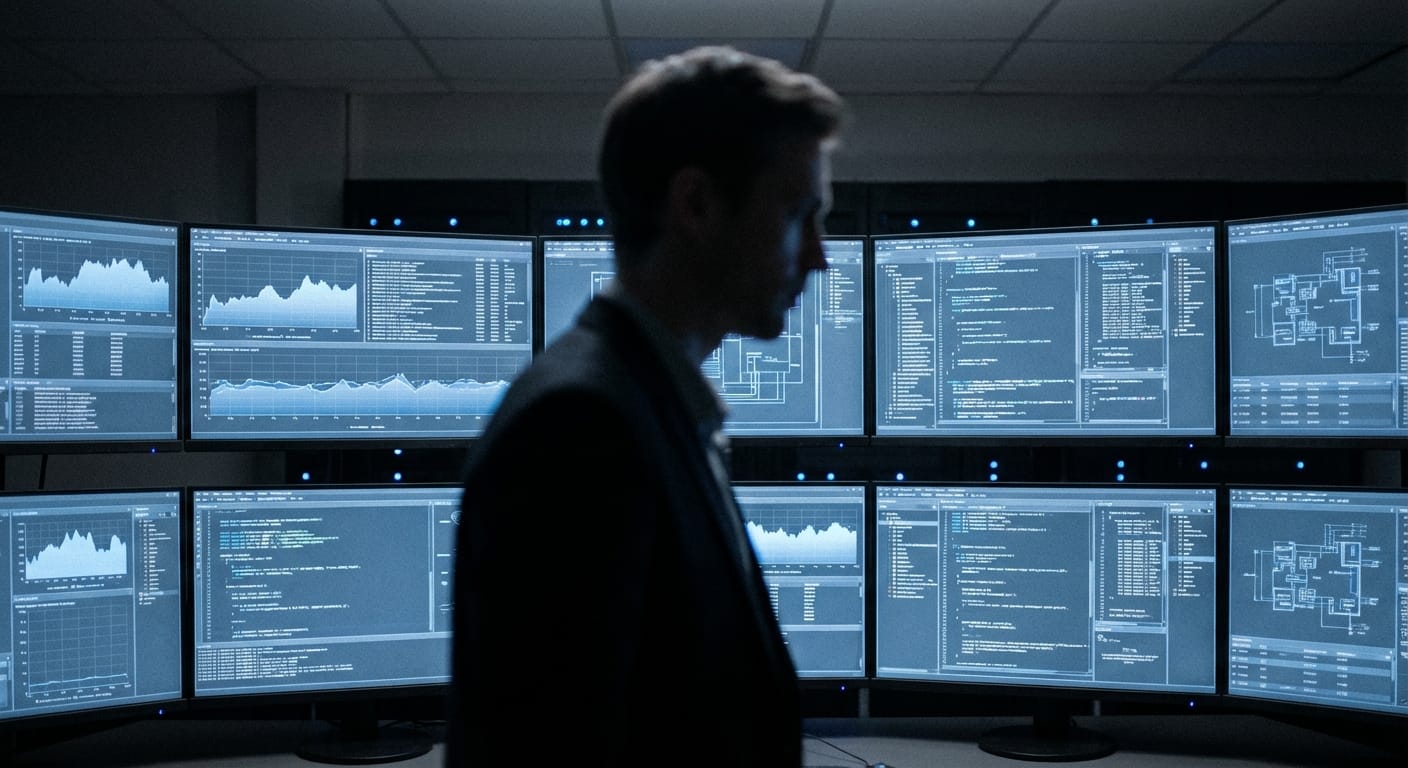
NASA's Jet Propulsion Laboratory (JPL) partnered with Anthropic to let Claude AI handle route planning from end to end. The system analyzed high-resolution imagery from the HiRISE orbital camera, placed waypoints every 10 meters, identified hazards, and ultimately wrote the drive commands in Rover Markup Language (RML) — NASA's proprietary coding language for rover operations.
Before any wheel turned, the planned route was stress-tested against more than 500,000 variables in a digital twin simulation — checking for rollover risk, wheel entrapment, and dozens of other failure modes.
The result: route planning time cut by half. What used to take several hours now takes one to two. And when a rover moves more, it sees more rock, collects more samples, and generates more science data.
In effect, NASA got twice the output for the same operational cost.
Why Claude?
There are plenty of AI models out there, and JPL has no shortage of in-house engineering talent. So why bring in Anthropic's Claude?
Two reasons: vision-language understanding and code generation.
An AI That Reads Images in Context
Mars route planning isn't a single-image problem. Engineers need to interpret high-resolution orbital photos, terrain elevation data, and slope gradients simultaneously — distinguishing rocky outcrops from deep sand from steep inclines.
Claude is a vision-language model, meaning it processes images and text together. It can look at a photograph and reason: "this section is too rocky," "this path has a gentle enough grade." It mirrors how a human engineer annotates imagery — but orders of magnitude faster.
An AI That Writes the Code Itself
Once the route is planned, commands have to be formatted in RML. Until now, engineers wrote that code by hand.
Claude generates code well — and not just generically. Through NASA's Claude Code interface, it was trained on prior mission data and can produce RML commands directly. The entire pipeline, from visual analysis to code output, runs inside a single model.
It also reviews its own work. If a waypoint looks too steep on second pass, Claude adjusts it before submission. That iterative self-correction is a meaningful safety improvement over single-pass human drafting.
| Capability | Claude 4.5 | Standard Computer Vision AI | Traditional Method |
|---|---|---|---|
| Image understanding | ✅ Vision-language model | ⚠️ Limited | 👤 Human analysis |
| Terrain judgment | ✅ Text + image synthesis | ❌ Image only | 👤 Human judgment |
| Code generation | ✅ Automatic RML output | ❌ Not possible | 👤 Engineer-authored |
| Self-review | ✅ Iterative refinement | ❌ Not possible | 👤 Team review |
| Validation | ✅ 500,000+ variables | - | ⚠️ Manual simulation |
Put simply, Claude sees the terrain, reasons about it, writes the commands, and checks its own work. That end-to-end capability is exactly what NASA needed.
NASA Is Playing a Longer Game
Why is NASA investing so heavily in AI autonomy? Because Mars is just the beginning.
The 20-Minute Problem
Light-speed communication between Mars and Earth takes over 10 minutes one way — 20 minutes round trip. Real-time remote control is physically impossible. By the time a "turn left" command arrives and "we hit a wall" comes back, the damage is done.
Martian rovers have always needed some degree of autonomy. But until recently, that autonomy was limited to obstacle avoidance. Route planning still happened on Earth. Claude changes that equation — route planning can now happen on-site, on Mars.
Lunar Bases and Deep Space
In its public announcement, NASA was explicit about the long-term vision:
"A game-changing technology needed to establish a permanent human presence on the Moon and push beyond Mars."
Think about what a lunar base actually requires. Autonomous rovers moving construction materials. Surveying hazardous terrain. Prospecting for water ice. None of that can wait 20 minutes for Earth approval on every decision.
Go further out — Jupiter's moon Europa, Saturn's Titan — and communication delays stretch to hours. At that distance, AI-driven autonomy isn't a convenience; it's a prerequisite for exploration.
The 456-meter drive is a proof of concept. NASA's roadmap extends to autonomous science experiments, autonomous sample collection, and eventually autonomous base operations.
The AI Ecosystem Already Operating on Mars
Claude isn't the first AI to work on Mars. It's joining an ecosystem that's been quietly running for years.
AEGIS (Autonomous Exploration for Gathering Increased Science) runs aboard both Curiosity and Perseverance. It examines rock imagery, decides which targets are scientifically interesting, and fires the laser or repositions the camera — all without waiting for Earth. Independent science, happening right now.
PIXL (Planetary Instrument for X-ray Lithochemistry) performs real-time mineralogical analysis using X-ray fluorescence. Its machine learning pipeline flags minerals that may indicate past biological activity. Three years into its mission, its mineral recognition library keeps growing.
Curiosity uses a laser-targeting AI that selects and zaps rock targets based purely on shape and color — no human in the loop.
What Claude adds to this ecosystem is the one capability that was still human-only: route planning.
What This Moment Actually Proves
Claude AI's Mars deployment demonstrates three things worth keeping track of.
First, AI has moved beyond chatbots into physical systems control. This isn't text generation — it's a real rover covering real ground. The system passed 500,000-variable validation and met NASA's notoriously demanding safety standards.
Second, the vision + coding combination works in production. One model that reads an image, reasons about it, and produces executable code — end to end. That's a workflow that previously required multiple specialized systems and human handoffs at every stage.
Third, human-AI teaming is the actual model for space exploration. Claude plans the route; a human engineer approves it before execution. AI drafts, humans verify, machines act. Not fully autonomous, not fully manual — a hybrid that gets the best of both.
NASA cut route planning time in half and is getting more science per sol as a result. The technology will scale to lunar operations and deep space. And when humans eventually set foot on Mars, the trails will have been scouted by AI rovers first.
456 meters on Mars. A small drive — but a significant leap.
Sources
- NASA's Perseverance Rover Completes First AI-Planned Drive on Mars — NASA
- NASA's Perseverance Rover Completes First AI-Planned Drive on Mars — JPL
- Here's How AI Is Changing NASA's Mars Rover Science — JPL
- Claude AI Powers First AI-Planned Mars Rover Drive — Anthropic
- AI pilots Perseverance across 1500 feet of Martian terrain — Astronomy.com
- NASA's Perseverance Mars rover completes its 1st drive planned by AI — Space.com